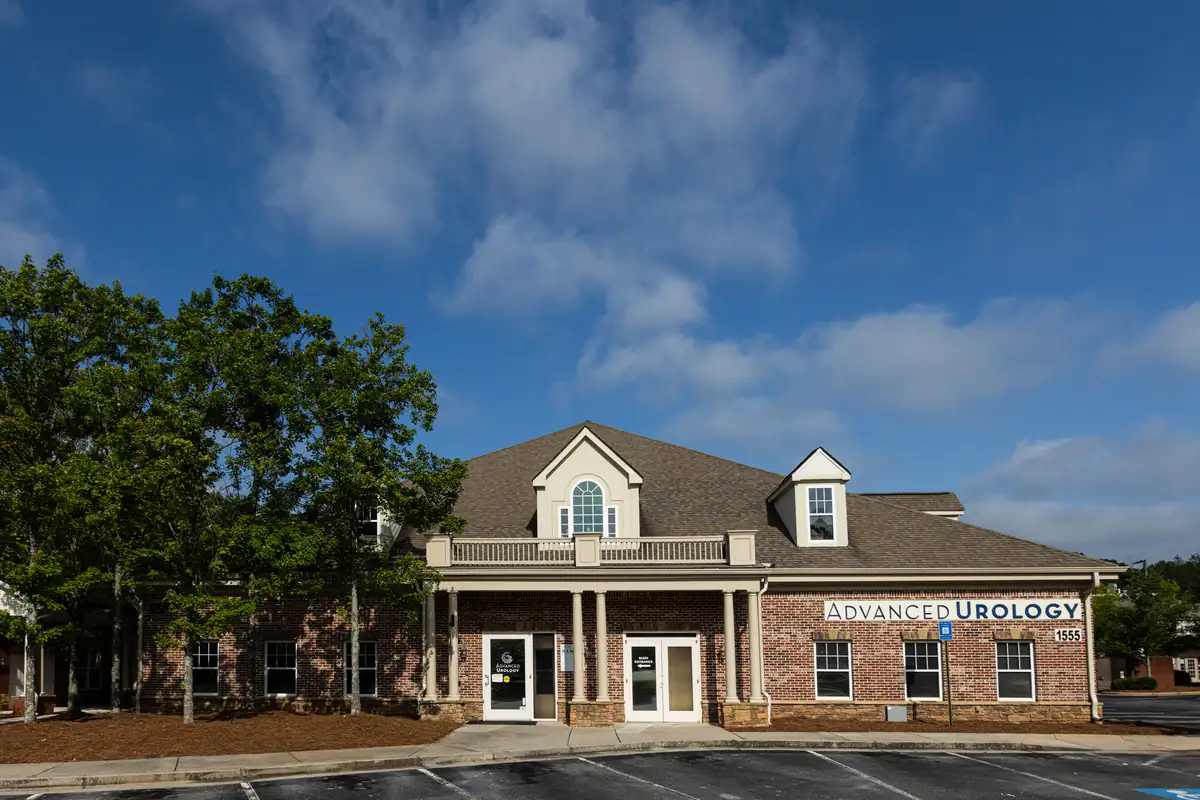
Snellville Clinic & Surgery Center
1557 Janmar RdSnellville, GA 30078
Snellville & Conyers, GA
Accidental bowel leakage can mean a smear in your underwear, stool that slips out when you pass gas, or an urge so sudden you don’t make it to the toilet. It is far more common than people admit, and it is treatable. Our urologists evaluate and treat bowel leakage at our Snellville and Conyers offices, for people from across Gwinnett, Rockdale, Newton and Walton counties.
Doctors call this fecal incontinence or bowel incontinence. It ranges from an occasional small leak to a complete loss of bowel control, and the right plan depends on which pattern you have.
Most people have more than one cause, which is why the evaluation matters. Common ones include damage to the ring of muscle around the anus during childbirth, nerve injury from diabetes, stroke or a spinal problem, long-term constipation that lets liquid stool leak around a hard mass, ongoing diarrhea, and earlier rectal surgery.
Advanced Urology describes part of the problem as a breakdown in the signals between the bowel and the brain. That idea is behind sacral nerve stimulation, one of the treatments described below.
Go to the ER for the warning signs listed on this page, because new numbness or leg weakness with bowel changes can point to pressure on the spinal nerves.
Call us soon, within days, if the leakage started suddenly, if your bowel habits have changed without an obvious reason, or if there is pain or blood with it. Leakage that has built up slowly over months or years calls for a routine visit, and there is no need to wait until it is severe.
We start with questions that can feel awkward but guide the plan: how often leaks happen, whether stool is solid or liquid, whether you feel the urge first, and what medicines you take. Bring a short diary of bowel movements and leaks for a week or two if you can.
An exam checks the muscles and nerves of the pelvic floor. If you also have bladder symptoms, a urine test and bladder scan are added. When another test or a colon check by a different specialist makes sense, we explain why before sending you.
Most people start with the first steps and move on if leaks keep shaping their day. Read about the last step on our InterStim for bowel control page.
Bladder and bowel leakage often travel together, especially after childbirth or with nerve conditions. The InterStim system also treats overactive bladder and some kinds of urinary retention, so one evaluation can look at both. See our bladder leakage page for the urinary side.
Both of our offices see people with bowel leakage. Call (678) 344-8900 to book in Snellville or Conyers.
Urologists who treat bowel and bladder leakage at our offices: meet the whole team.




An Advanced Urology podcast episode on fecal incontinence and how bowel control can be restored.
It becomes more common with age, but it is not something you have to live with. Weaker pelvic muscles, nerve changes and constipation all play a part, and each has treatments. Many people improve with diet changes and pelvic floor work before needing anything more.
Yes. Our urologists evaluate and treat fecal incontinence at every Advanced Urology office, including Snellville and Conyers. Advanced Urology also offers sacral nerve stimulation, which treats both bladder and bowel leakage, and we coordinate with a colon specialist when another cause needs to be ruled out.
Our Snellville Clinic & Surgery Center at 1557 Janmar Rd and our Conyers Clinic on Wellbrook Circle both see people with bowel control problems. Patients come from Loganville, Grayson, Lilburn, Covington and McDonough as well. Call (678) 344-8900 or book online to choose the closer office.
Most people do not start there. Diet changes, bowel retraining, pelvic floor therapy and medicines come first, and many people need nothing more. If those fall short, InterStim begins with a test phase, so you see whether it helps before any long-term device is placed.
General education, not a diagnosis. Our urologists explain the risks and benefits of each treatment with you.
Book a private visit in Snellville or Conyers and we’ll start with the simplest steps.