Snellville Clinic & Surgery Center
1557 Janmar RdSnellville, GA 30078
Snellville & Conyers, GA
Kidney stones can cause pain that comes out of nowhere and make it hard to sit still. Our urologists in Snellville and Conyers help you get through this stone, then look at why it formed.

Most people describe a deep, sharp pain in the side or back, between the lower ribs and the hip, that comes in waves and can move toward the belly or groin. Others notice something quieter.
Go to the emergency room for pain you can’t control, fever or chills, vomiting that won’t stop, or if you can’t urinate. A stone blocking the kidney with infection behind it needs urgent care.
If the pain is manageable, you’re keeping fluids down and you have no fever, call us. Our team will find the soonest visit we can offer in Snellville or Conyers. If you’ve already been to an ER, bring your scan results and discharge papers.
Pain in the side can come from other problems too, so we don’t assume. Imaging and a urine test confirm whether a stone is there, where it is and how big it is.
When a stone won’t pass, Advanced Urology offers:
ESWL and ureteroscopy are done at our Snellville surgery center, and follow-up can be in Conyers.
Once you’ve had a stone, another is common. A stone prevention visit looks at the reason: how much you drink, salt and protein in your diet, and conditions such as gout, diabetes or a parathyroid problem. Blood and urine tests and an analysis of the stone guide changes that fit your life.
For stone care, visits happen in Snellville or Conyers. Phone (678) 344-8900 and tell us it’s a stone.
Urologists who treat kidney stones at our offices: meet the whole team.


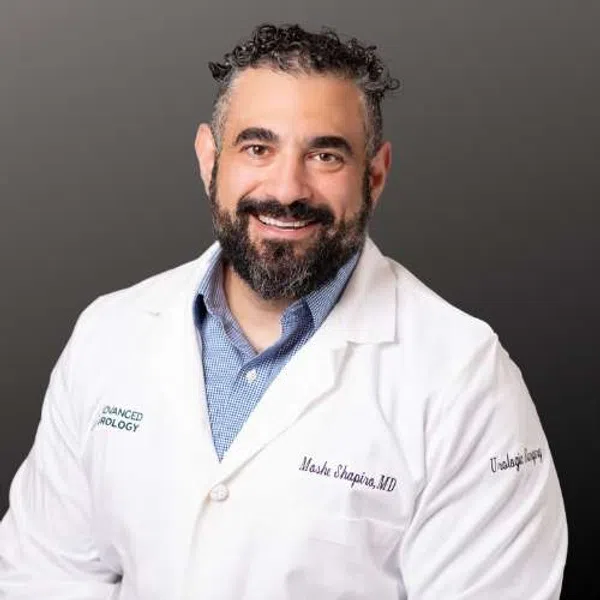



Dr. Marc Greenstein, who sees patients in Conyers, talks through stones.
Small stones often pass within days to a few weeks; larger ones may need a procedure. If yours has not passed after a few weeks, imaging shows where it is and whether ureteroscopy or shock wave treatment is needed.
Yes, if we ask you to. Catching the stone lets the lab analyze what it is made of. That result guides diet and medicine changes to prevent the next one.
A stent is a thin tube that keeps urine draining while the ureter heals. Many people feel it, with urgency or some discomfort, until it is removed.
Tell us about every blood thinner. Advanced Urology’s instructions ask you to stop blood thinners a week before ESWL, and stop them just as your care team directs.
Yes. A fever with a stone can mean infection trapped behind a blockage. Go to the ER, where the blockage is usually drained with a stent or tube.
Yes. Visits, imaging review and follow-up can be at our Conyers clinic on Wellbrook Circle. Shock wave lithotripsy and ureteroscopy are done at our Snellville surgery center.
Educational content, not a diagnosis. Your care team will explain what any procedure involves, including its risks.
Call us and our team will look for the soonest opening in Snellville or Conyers.