Snellville Clinic & Surgery Center
1557 Janmar RdSnellville, GA 30078
BPH procedures · Snellville & Conyers
Aquablation removes the prostate tissue that blocks urine flow with a robot-guided water jet, mapped in real time on ultrasound. It suits many men whose prostate is too large for UroLift but who still want a lower chance of sexual side effects than older operations. Evaluation starts at our Snellville or Conyers office.

A scope is passed through the urethra while an ultrasound probe shows the prostate on screen. The surgeon outlines exactly which tissue to remove, and a robot then guides a high-velocity jet of water to clear that area evenly. The planning step lets the surgeon steer away from the areas linked to ejaculation.
In Advanced Urology’s treatment guide, Aquablation sits in the medium-gland group, roughly 40 to 80 cc. It is used for men with bothersome BPH symptoms who want lasting relief and care about urinary and sexual function afterward. Men with very large glands may be steered toward HoLEP or a robotic simple prostatectomy, and men who want to avoid surgery may ask about prostate artery embolization.
Aquablation is done under anesthesia in a hospital rather than in our surgery centers. Advanced Urology’s guide lists at least one night in the hospital for monitoring and bladder irrigation, and a catheter for about 2 to 5 days. You go home with instructions for the catheter and a date to have it removed.
Once the catheter is out, expect some burning, urgency and pink-tinged urine that come and go while the treated area heals. Drinking steadily through the day keeps urine light and helps flush small clots. Walking is encouraged, but lifting, hard exercise and straining on the toilet are usually limited for a few weeks, and a stool softener can help.
A follow-up visit at our Snellville or Conyers office checks your stream and how well you empty, so the result is measured rather than guessed.
Temporary bleeding and short-term trouble urinating are the most common issues. Narrowing of the urethra and sexual side effects are less common. Our urologists go over these against the risks of the other procedures, based on your scan and health.
Start with a visit at either office. Call (678) 344-8900 to choose Snellville or Conyers.
Urologists here who evaluate men for Aquablation and other BPH procedures: meet the whole team.


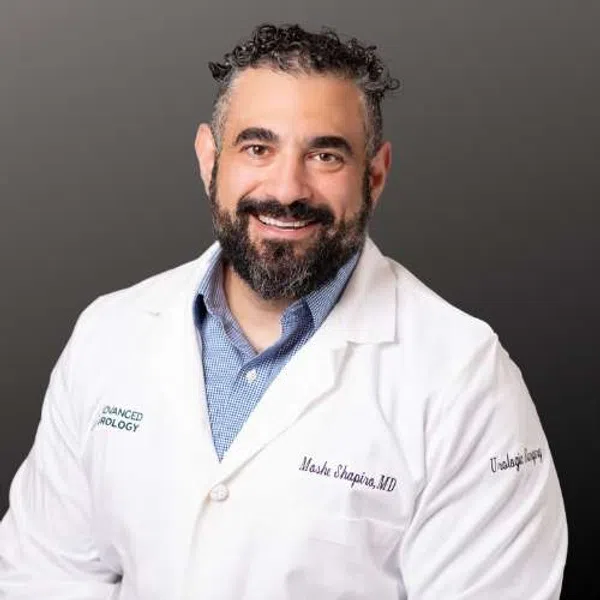



Dr. Marc Greenstein, who sees patients in Conyers, explains Aquablation.
Aquablation is planned to lower the chance of sexual side effects, and Advanced Urology’s guide lists a reduced risk compared with traditional surgery. It is still possible, so if keeping ejaculation matters to you, say so early. UroLift and prostate artery embolization are the options most focused on protecting it.
Aquablation removes tissue, so the bladder is rinsed through the catheter overnight while the treated area settles and any bleeding is watched. UroLift does not remove tissue and is done as an outpatient visit at an Advanced Urology surgery center. The hospital stay is part of why the two fit different gland sizes and goals.
Often, yes, but it takes planning. Some blood thinners have to be paused before surgery, and that decision is made together with the doctor who prescribed them. Bring a full medicine list to the first visit so our team can map out the timing before a date is set.
Many men notice a stronger stream once the catheter is out, though burning and urgency can take a few weeks to settle as the area heals. Call us if you cannot pass urine after the catheter is removed, or if you have heavy bleeding, clots or a fever.
This page is educational, not medical advice. Our urologists explain the risks of Aquablation and every alternative before you decide.
An evaluation in Snellville or Conyers will tell you, and we’ll compare it with the other options.